About Fellstead
A clearer view of the company.
Fellstead was built on a simple idea: better business decisions start with a clearer view of what is actually happening inside the company.
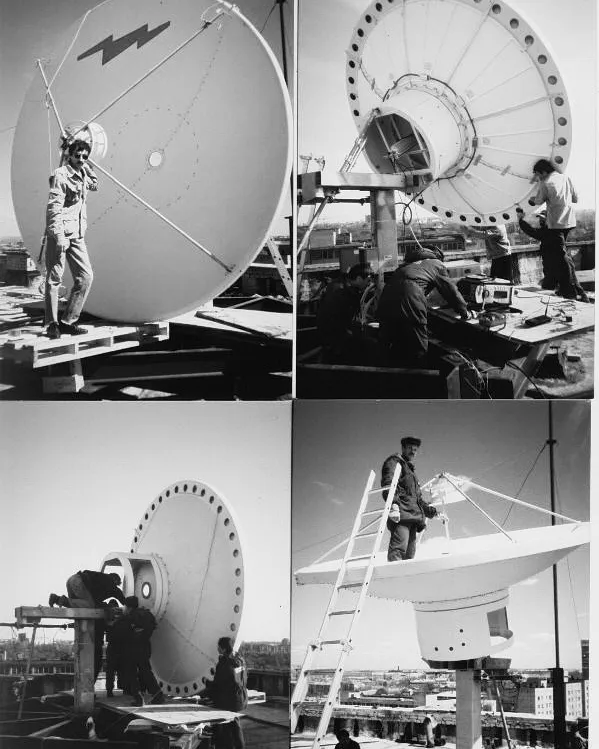
How It All Began: Itcom, 1999
An early technology venture — and the beginning of a long-running interest in how companies are built, how systems work, and why some businesses progress while others stall.
The framework came before the product.
The 5 Signals™ did not begin as a questionnaire, a report template, or a software concept. It grew from years of studying companies, business models, investment decisions, operating problems, and the recurring contradictions that often lie behind visible symptoms.
Why Fellstead exists
From judgment to a repeatable system.
Companies rarely struggle because of one isolated issue. A growth problem may actually be a positioning problem. A sales problem may begin with the customer definition. Strong revenue can hide weak economics. A busy team can still be moving in the wrong direction.
Over time, those recurring patterns were organized into five connected areas: Vision, Value, Market, System, and Momentum. Together, they create a structured way to examine where a company stands, what is aligned, what is contradictory, and what deserves attention next.
01
Vision
Direction, strategic intent, priorities, choices, assumptions, and end-state logic.
02
Value
Customer problem, need, product relevance, value proposition, trust, and retention logic.
03
System
Check whether the operating foundation supports more growth.
04
Market
Create a clean baseline before changing direction.
05
Momentum
Create a clean baseline before changing direction.
The origin of The 5 Signals™
Independent intelligence, not another layer of advice.
The purpose of Fellstead is not to tell founders what they want to hear or to replace their judgment. It is to make the company easier to see.
That means separating facts from explanations, evidence from assumptions, and symptoms from causes — then showing where the five signals reinforce one another and where they do not.
Perspective
See the whole company
Business questions are rarely confined to one function. Fellstead looks across strategy, customer value, market conditions, the operating system, and actual momentum.
Evidence
Make uncertainty visible
What is known, what is claimed, what is assumed, and what is still unknown should not be treated as the same thing.
Contradictions
Look between the signals
The most useful findings often appear where two parts of the company tell different stories — strategy versus execution, market versus product, growth versus economics.
Trajectory
State is only the beginning
A company is not static. The longer-term vision for Fellstead is to make changes in state, progress, risk, and evidence easier to understand over time.
A working lineage
Built through years of company, investment, and performance work.
Operating work
Working inside real business questions
Years of independent business and consulting work created the foundation: strategy, structure, execution, commercial questions, and the practical consequences of decisions.
Investment lens
Learning to evaluate companies from the outside
Investment screening and research sharpened a different discipline: identifying missing evidence, testing assumptions, comparing narratives with facts, and asking what must be true for a company to work.
The framework
The 5 Signals™ takes shape
The recurring questions were formalized into one framework spanning Vision, Value, Market, System, and Momentum — designed to reveal both individual weaknesses and cross-signal contradictions.
Fellstead
A framework becomes a product
Fellstead turns that accumulated method into a structured diagnostic and, over time, a broader company-intelligence system.













Founder
Vitaly Solten
Vitaly Solten is an entrepreneur and independent analyst whose work has focused on company building, business performance, venture decisions, and the structural patterns behind growth.
Across operating work, investment analysis, research, and founder-side diagnostics, the same issue kept appearing: important business problems are often misdiagnosed because they are examined one function at a time.
The 5 Signals™ is the result of turning that accumulated judgment into a structured system. Fellstead is the company being built around it.
How Fellstead thinks
A few principles behind the work.
01
Evidence before narrative
A compelling story is useful only when the underlying evidence supports it.
02
Contradictions matter
Misalignment between signals often reveals more than any single metric or answer.
03
Unknown is a valid answer
Uncertainty should be surfaced, not disguised as confidence.
04
Context changes interpretation
The same metric can mean very different things depending on market, stage, model, and timing.
05
State and trajectory are different
Where a company stands matters. Whether the evidence is improving or deteriorating matters just as much.
06
Clarity should lead to action
A diagnostic is useful when it sharpens what deserves attention next.
A clearer view changes the next decision.
Start from higher ground.
Complete the assessment, add any useful materials you already have, and receive a structured diagnostic across the five signals.
© 2026 Fellstead
The 5 Signals™ is a proprietary framework developed by Vitaly Solten